I've been posting cooking reels and stories on Instagram for just over three years now, but I've never written much on the topic. However, through the countless hours I've spent watching YouTube videos, reading recipes, and actually cooking, I've picked up quite a bit that I'd love to share with the world.
So here is the first piece in my new series of articles called Yak's Kitchen.
(To be clear, there will be no affiliate links. Any links I provide are just for your convenience, and I do not make money from them. What there will be is thoughtful discussion on the topics at hand to help you learn about the art of cooking and managing your home kitchen. This series is purely about sharing my cooking passion and knowledge with whomever is interested to read.)
We'll be looking at pots and pans, managing food inventory, deciding what to cook, how to follow recipes (or not), and plenty more for as long as I can keep going. If you want to be notified by email of the next instalments in this series, subscribe here.
Utensils
My utensil drawer is a mess. Not because I can't be bothered organising it, but because I have too many to organise inside a drawer of my one-bedroom NYC apartment's kitchen. The thing is, I pride myself on being an intentional spender, buying things that I think I'll actually need and use, so perhaps it's the drawer size that's the issue. Or the kitchen size. It seems that newer apartments these days target millennials who spend more time on UberEats than in the kitchen.
And yet, even though the utensil drawer is technically a mess, I have no trouble finding anything, never have to stuff things in to push it closed, never have it jam when I open it. Everything is fine, just the utensils themselves are not in neat straight lines with dividers.
So here are all my utensils, one by one (in no specific order), with my thoughts on how useful they are for me, whether I recommend them based on your cooking interest and level, and which ones are worth spending on. I'm not a professional and never have been (except for one time a friend and I cooked for a 40-person Pesach retreat in Texas in 2017, but looking back, I barely knew anything then anyway), so these thoughts are focused around cooking at home.
Note: This is a long article, so feel free to jump to the utensils that catch your eye!
Chef's knife
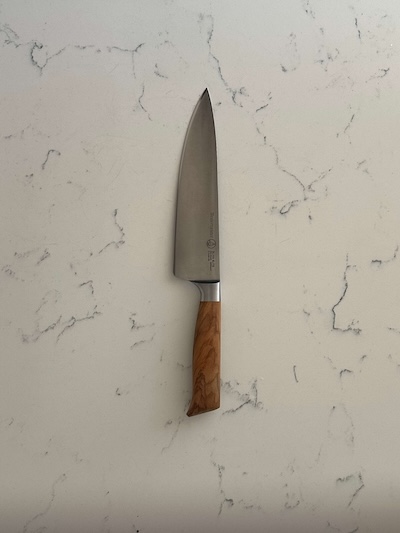
A chef's knife is arguably the most important utensil in the kitchen. Don't be confused by the word "chef's"; it just refers to the size and shape, which is usually around an 8" blade. Some people get by on small serrated knives for everything, but once I started using a chef's knife, it was game over. It just cuts stuff better, simple as that. And a nice side benefit of the larger blade is being able to scoop up cut food and slide it into a bowl.
That said, your first chef's knife need not cost $150. A more expensive knife doesn't automatically make you a better cook, and a good philosophy to follow — especially in the kitchen where things can get expensive fast — is to buy a medium-low price item to start, and once you're sure you use it a lot, you can treat yourself to something better. I had three chef's knives in the $20-$60 range before buying the one pictured above (Messermeister Oliva Elite). A perfect starter chef's knife I own and recommend is from Brian Lagerstrom, and if that's sold out, a Victorinox Fibrox Pro, which is also sitting in my drawer as backup to the backup.
Make sure you hand-wash and dry your chef's knife after each use. Don't dump it in the sink with the rest of your dirty dishes, or you'll blunt it pretty quickly. I keep mine in a cheap sleeve for protection.
And please, for the love of G-d, do not buy a knife block set. The "deal" price hides the fact that you're still paying a few hundred bucks for a bunch of useless knives. Tell me when you last used those "steak knives" or the long skinny one. Be intentional, buy a chef's knife.
Recommendation: must have, start with $40-$60 and increase if you feel the need
Silicone-tipped spoons
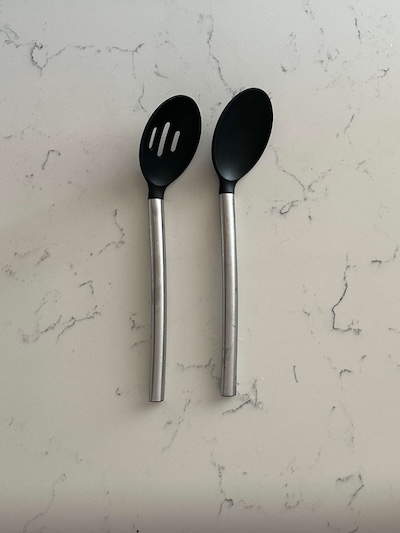
If you use any nonstick pots or pans (I do), you'll need some silicone-tipped utensils, because metal ones will scratch the nonstick coating. Stirring with a wooden spoon probably won't scratch, but they are harder to use for scooping and serving. These are cheap, come in a set (the slotted one is sometimes useful), and do a simple job.
One thing to look for is that they are just silicone-tipped, not fully made from silicone, since those are much more flimsy.
Recommendation: must have if you cook on nonstick, spend under $20
Wooden spoons
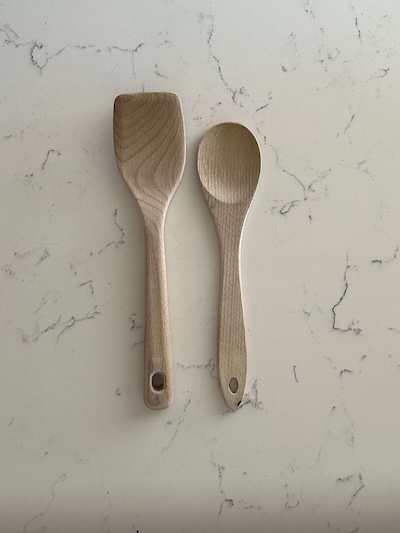
I was gifted the round wooden spoon for my birthday in 2023, and it's still going strong. I bought the flat-edge one about a year ago to help with deglazing, but I don't much love it, and usually just reach for the round one. Deglazing is a cooking technique where after searing some protein, leaving brown bits of flavour on the bottom of the pan, you add some liquid (often wine or stock), and the heat reaction lets you easily scrape up the brown bits, with the threefold benefit of adding flavour to your food, keeping the pan clean, and preventing burning. This is often done when making sauces, soups, and stews, and silicone utensils often aren't sturdy enough to get this job done.
Due to their shallow form factor, most wooden spoons are not much good for serving, but they can be more fun, look nicer, and feel more "authentic" than silicone for some.
Recommendation: good to have if you do anything requiring deglazing (or dough stirring), spend under $20
Tongs
It is written in chapter five of Ethics of the Fathers that G-d created the first set of tongs at twilight on the sixth day of creation, since "tongs are made with other tongs".
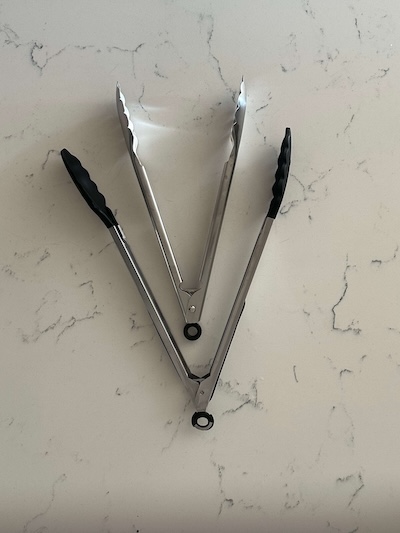
Regardless of your stance on G-d, tongs are an extremely useful kitchen utensil for precise food handling. Anything where there are "pieces", like turning over a steak, searing chicken breast or cubes of beef, roughing up a stir fry, fishing spaghetti out of a pot. I don't need to explain much more. I have a silicone-tipped pair for my nonstick cooking, thought they're old and a bit out of shape, and a metal pair for everything else. Go with 12" rather than 9" so you can reach into deeper pots.
Recommendation: must have, spend under $20
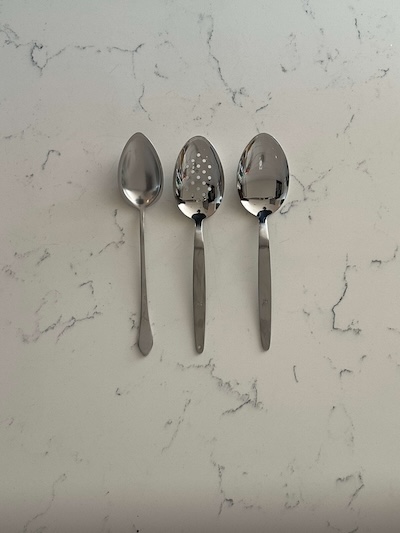
Metal spoons
The spoon on the right is my current favourite kitchen utensil, having just bought it a month or so ago. I bought it together with the slotted one in the middle, more because I wanted to take advantage of the high shipping cost (they're not available on Amazon), but in hindsight I should have just bought another regular one. These are called Kunz Spoons, and they have a worship-level following all of their own.
I have a lot of fun using the Kunz Spoon. Sometimes I'll opt for my stainless steel or cast iron pan just so that I can use it, even though it means more washing effort for the pans. Fun is definitely a feature when it comes to cooking, and any hobby for that matter. If you're serious about cooking, grab yourself a Kunz Spoon. It's larger than a typical cutlery spoon and has a larger volume, so you can use it for stirring, flipping, and serving.
The one on the left is a Gestura 01 spoon that I bought a couple years ago. It has a one tablespoon volume for precision (not relevant for me) and the tapered tip helps with plating sauces (again, not that relevant for me). Now that I have the Kunz, I rarely opt for the Gestura, because the tip can be annoying for stirring; in hindsight, I wouldn't have bought it.
Recommendation: no need for starters, but nice to have and lots of fun if you're more serious
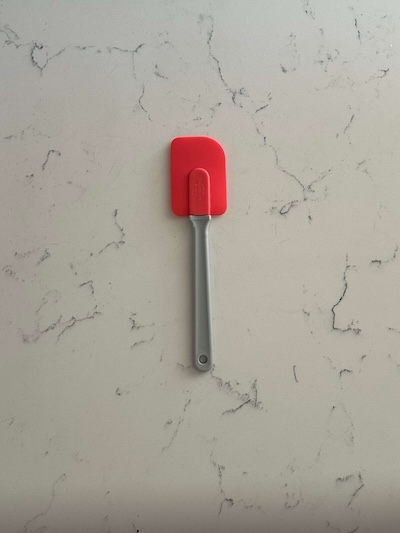
Rubber spatula
Flexible rubber spatulas are also a lot of fun to use when stirring, as they leave clear trails and let you clean down the sides of your pan really well. When it comes to pouring sauce from a bowl or pan, a rubber spatula is your best friend, as you can get every last drop of it, unlike a spoon. That said, I'm thinking to "upgrade" to a symmetrical maryse, which is similar but can scrape in both directions, is a bit sturdier, and slightly deeper, allowing for better serving and handling of foods like mashed potatoes.
Recommendation: no need for starters, but nice to have if you're more serious, spend under $20
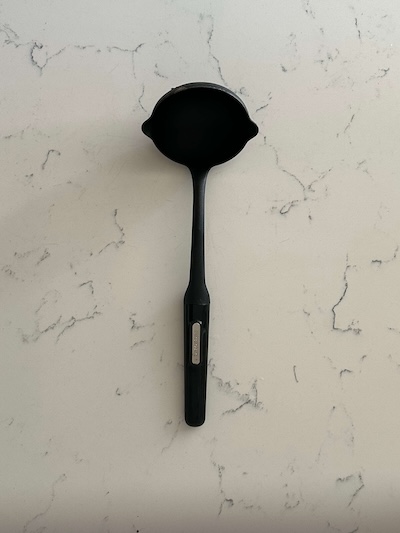
Ladle
This is an obvious one if you ever make soup (and if you don't, why not?). Mine is silicone because I need it to work for nonstick as well, although I don't love my exact model as it's silicone all the way through and therefore a bit too flexible. Stainless ladles are very pretty (in a utilitarian way), but it's not important enough for me to go and buy at this point, since mine gets the job done just fine.
Recommendation: must have, spend under $20
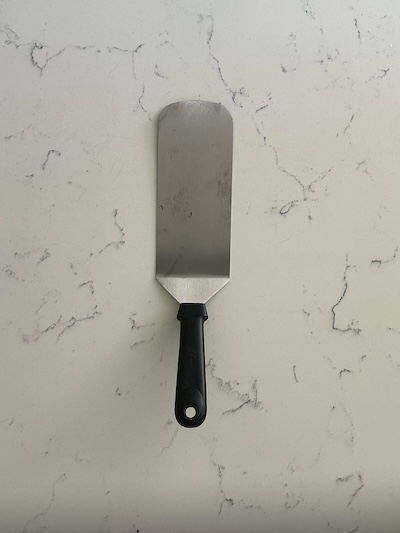
Burger turner
I bought this when I wanted to make smash burgers and realised that I needed something that could smash the patties and also scrape underneath them to flip them over. For burgers, I'm doing it on cast iron, stainless steel, or the grill, so a silicone tip was unnecessary, and in fact would be inferior for scraping due to the thickness. I've since found this turner useful for other ad-hoc uses like lifting a hot focaccia out of my cast iron or chopping the meat and onions in the pan and then slapping onto a roll for my kosher Philly Cheesesteak (reel here).
Recommendation: must have for smash burgers, otherwise useful here and there but not really needed, spend under $20
Bench scraper
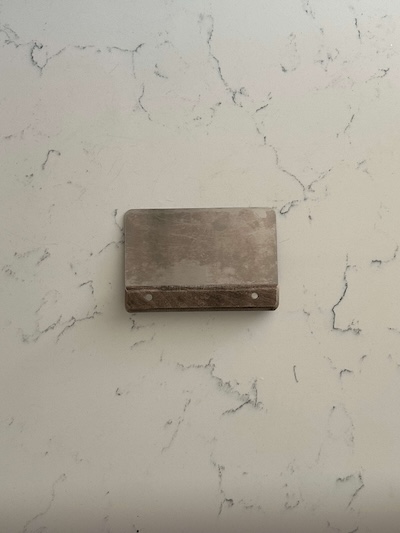
The other tool I used in that Philly Cheesesteak video for chopping in the pan was this bench scraper. But that's not its primary use. I'm sure you've seen Internet chefs use bench scrapers everywhere for scooping chopped food from the cutting board to a mixing bowl or into a pot. Debate abounds whether a chef's knife is good enough for this task, and for me it depends. If I'm not cutting too much, I'll often just use my knife to collect the food, but if I'm doing lots of chopping and using several bowls (e.g., for a stew), the bench scraper is easier and can hold more pieces than a knife.
Other fun uses of the bench scraper are, as the name suggests, (1) scraping food off your counter, especially small bits of stuck dough, (2) shoving water off your wooden cutting board after rinsing it, giving the towel an easier job, and (3) cutting dough into portions (this is actually a "main" use of the utensil, which is also commonly referred to as a dough cutter).
Recommendation: no need if you prefer collecting with a knife, but useful for lots of chopping, spend under $20.
Ground meat chopper
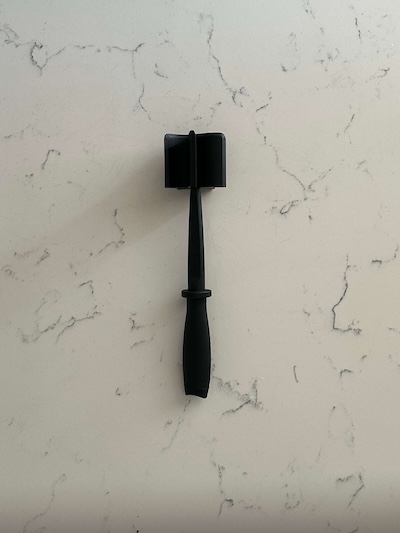
I first learned of this tool from Brian Lagerstrom, one of my favourite YouTube cooks. It is surprisingly adept at its main use, which is for crumbling up ground beef while cooking, which turns out is quite an important technique for getting good browning and flavour for your bolognese or taco meat. More crumbled up meat means more surface area available for browning, but also better texture compared to chunks. A sturdy spoon can get you most of the way there, but this tool does it better and with much less elbow grease.
One newer use I have for this chopper is for crushing whole tinned tomatoes. Sure, it's fun to do it by hand in a bowl, but this is another solid option if you want to do it directly in the pan.
Recommendation: no need, but a great step up from spoons, spend under $10
Microplane
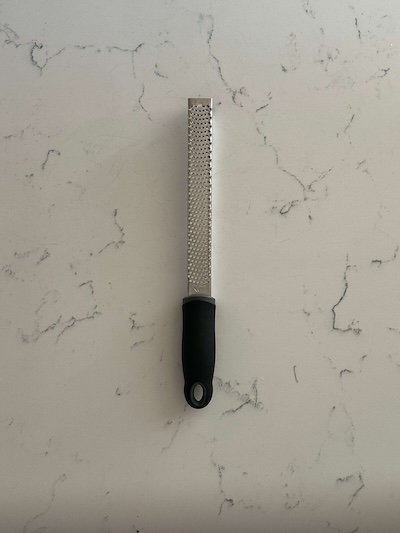
My relationship with my microplane has soured over the years. My original idea in buying one was for grating garlic and ginger, but I found that the long and thin form factor meant that garlic would often slip off the side of the plane, which was pretty annoying. I also feel like no matter how hard I try, there are always shredded bits that I can't get off the plane into the food. I've seen wider ones with rims and convenient slots for sliding the grated food into your bowl or pot, so maybe I'd like those more. But the truth is, these days, most of my garlic use is smashing it under my knife and then rock-chopping to get a solid mince. Grated garlic does have a different flavour profile, but most of the time, it doesn't make enough of a difference for me to whip out the microplane.
I will note that for zesting lemons and limes, this microplane is actually fine, but I don't zest all that often. And if you're grating cheese, a wider model is way more helpful.
Recommendation: don't buy this type, maybe a wider one, but also not much real need, spend $10
Tweezers
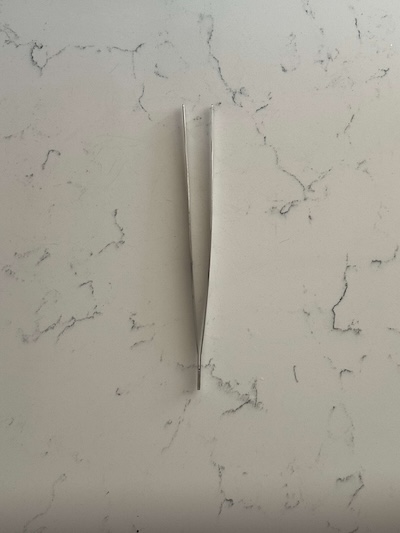
Perhaps the most cheffy of the utensils in this article is the tweezers. Initially designed for precision restaurant plating (think microgreens), kitchen tweezers have become more popular on the Internet, and I succumbed to buying a pair a couple years back. Maybe my skills aren't good enough, but I find that they're not always strong enough to turn steaks or chicken, or that tongs just get a better grip. My main use for tweezers these days is for getting pickles or pickled onions out of a jar, and they do excel there, however a fork would do just fine for most.
Recommendation: not needed unless you really care about plating, spend under $20
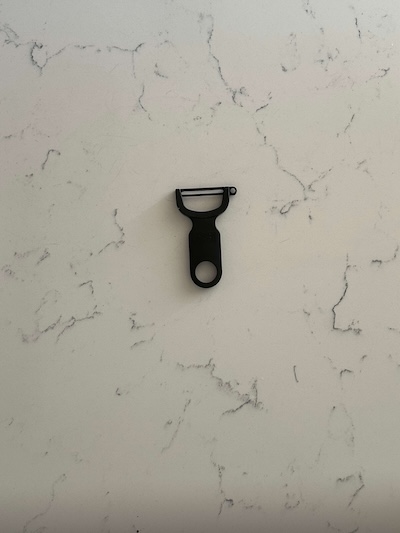
Y-shaped peeler
I grew up using straight peelers to help my mum peel potatoes or carrots, and quickly grew to hate the things. And in general, I'm not much of a peeler. For mashed potatoes, I often do not peel them (see the potato masher and potato ricer sections next for more on my current mashed potato technique), and for stews or braises, I'm often okay with just rinsing carrots before chopping.
However, whenever I have decided to peel something, a Y-shaped peeler has been a blessing. Mine is a Kuhn Rikon that cost me all of $5, and it's a real pleasure to use. It never slips off, and you can get nice, long peels in one motion.
Recommendation: must have if you don't like peels, spend under $10
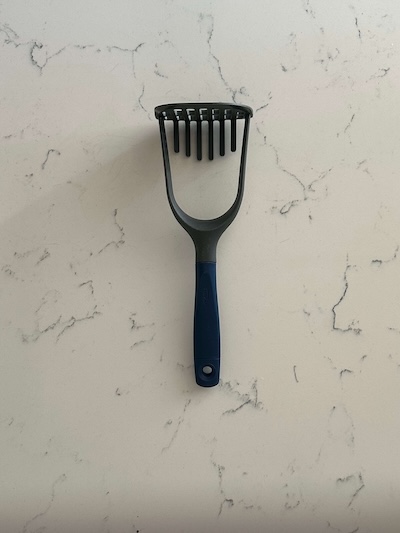
Potato masher
Mashed potatoes takes more time and effort than its commonality as a side dish would suggest, and for me it's probably fewer than 10 times a year. Nowadays for mashed potatoes, I use a ricer as discussed below, but even when I used to use this masher, I never loved it much. It did the job, but I imagine a metal one would probably have required less force and easier cleaning. I hardly reach for this utensil anymore.
Recommendation: pretty much must have for mashed potatoes, probably get a metal one, but rendered almost useless if you have a ricer, spend under $25
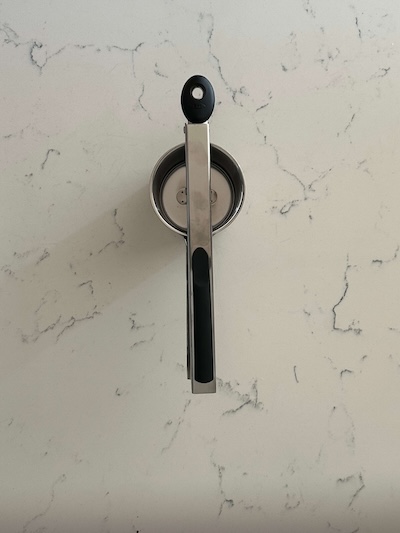
Potato ricer
We're still talking about mashed potatoes, yes. Who knew the humble potato would get so much airtime? Once you use a ricer, there's really no going back. It's very satisfying watching the potato dissolve into thin, soft strands under the easy leverage of your forearms. The texture is far better than a potato masher, and requires much less effort, which means you don't need to "work" the potatoes as much, resulting in less gluey mash. This is a bit of a bulky utensil storage-wise, and I'm thankful for my dishwasher each time I use it, but I'd agree with Internet Shaquille that it's worth buying one over a masher even for one use a year.
When it comes to peeling the potatoes, you can technically skip that since the ricer retains the skin for you, but then you have to remove that before loading in the next few chunks of potatoes, and I've found that annoying. My mash sample size isn't big enough yet to have properly compared the effort of peeling the potatoes before cooking versus removing the peels from the ricer. I did make gnocchi a few times in 2025, however, and here the ricer is close to essential to get the required texture.
Recommendation: strongly preferred if you make mash, must have if you want gnocchi, spend around $30
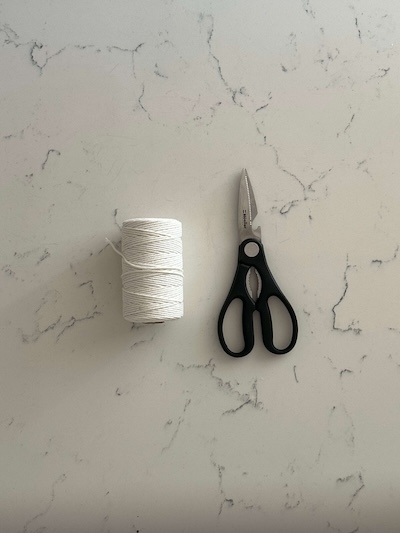
Shears and twine
By rights, these two items should be separate, but I included them together since my primary use for the shears is to cut kitchen twine. And my primary use for twine is to tie up a bundle of herbs and drop it in a stew or braise, making it much easier to fish out later before serving. Other good uses for the kitchen shears are cutting scallions for garnish (let's say you forgot to slice them and you've already cleaned and put away your knife and cutting board), cutting raw chicken into cubes, and for breaking down poultry (I used to eat a lot of chicken wings, just ask my old roommates, and I always preferred separating them into drums and flats).
But if I'm not making wings, I could easily get by without the shears, and they're definitely not essential. Any time I break down poultry now, for example a raw or cooked chicken, my knife is more than fine. Only if you plan to crack through the backbone for whatever reason would the shears come in handy.
Regarding the twine, as I've said, my main use is for herbs, but if you're a bit more advanced, this would be useful for trussing whole chickens or roasts. I have never bothered learning how to truss a chicken (sorry, Thomas Keller), so I cook mine either as-is or spatchcocked, and my beef roasts often come with a netting.
Shears recommendation: no need, but nice to have here and there, spend under $30
Twine recommendation: only if you care about the herbs or trussing like I mentioned, but for $2 for a roll that will probably outlive you, why not?
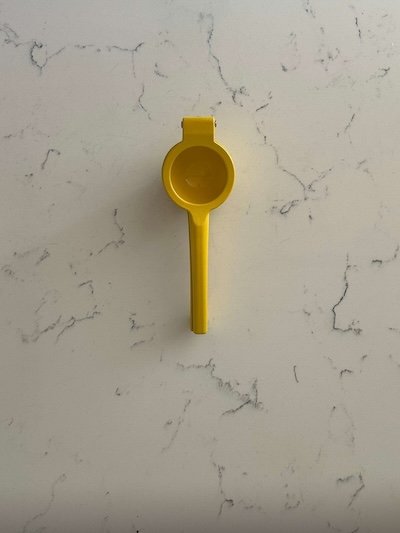
Citrus squeezer
Unlike some, I don't keep lemons and limes around much, so I don't find myself using the squeezer all that often (I get a lot of my cooking or salad acids from vinegar), but it's very useful whenever I do. You can extract more juice than just using your hands, and it's easier. I still remember when someone told me that the lemon should be placed cut side down into the squeezer... that was quite a revelation. All that being said, you can definitely go without one of these in the average kitchen.
Recommendation: no need, just easier, spend under $20
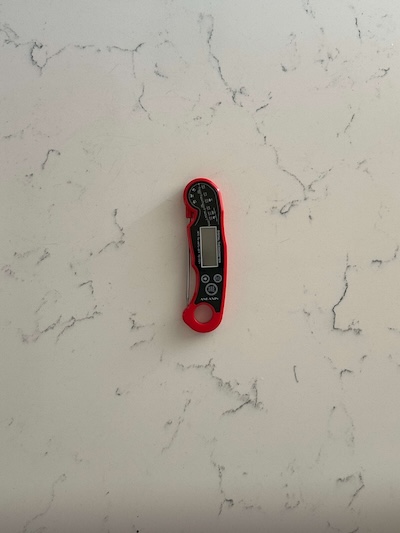
Probe thermometer
Owning a probe thermometer is a telltale sign you've started to take cooking more seriously. While I'm sure everyone has a friend who can cook great steaks with his fingers for gauging temperature, a thermometer is nonetheless an objectively more accurate instrument, and when it comes to chicken breast, there's real food safety to take into account. My thermometer has gotten quite a bit more use since I started baking bread and needed to measure the water temperature before adding it to the flour, so for me it's an essential tool at this point.
Recommendation: good to have if you're getting more serious or cooking things needing precise temperature, spend under $10
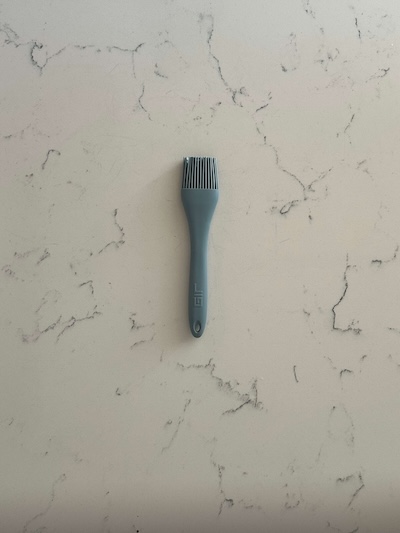
Brush
I'll be honest, I got this brush (along with the bench scraper and citrus squeezer) using my signup credit for the 14 seconds that I had the Flip app. My main uses are to to apply sauce to salmon, glaze ribs (reel here), or egg washing certain breads like bagels or burger buns (or that one time I made sausage rolls). These are definitely more niche use cases, so I'm happy I got the brush for free, but overall, it gets fewer than 10 uses a year.
Recommendation: no need unless you're doing lots of pastries, spend under $10
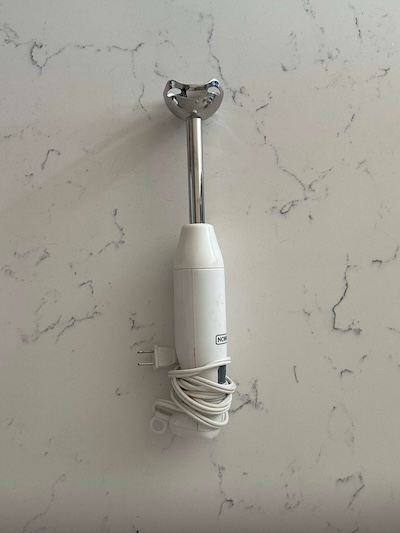
Immersion blender
A couple weeks ago, my delusions of invincibility were shattered when I was blending a tomato soup using a NutriBullet, and the cup burst open when I twisted the lid, causing the hot soup to go absolutely everywhere (I'm still finding tiny droplets on obscure parts of my cupboards). This was my fault, of course, for not obeying the golden rule of blending hot liquid, which is not to fill the cup more than a third or half. Thankfully, the cup itself did not shatter, but it was not a fun experience and I hope my mental scars heal soon.
And although this story is not the reason to use immersion blenders (because for some soups, tomato included, I want the super duper smooth texture only achieved by a standing blender), they are a great tool and one I use several times a year, especially come winter, for soups and curries. I don't make my own mayonnaise for some reason (I really should start), but they're very useful for that, too, and much easier than whipping out a standing blender.
There might be differences between more expensive models of immersion blenders, but I'm not sure. Mine cost around $20, has two speed settings, has survived countless dishwasher cycles, and still blends well, so that's good enough for me to recommend.
Recommendation: not strictly needed if you already have a standing blender, but a very convenient and affordable alternative if you start blending often, spend under $30.
So that brings us to the end of my utensils list. There's more to say on each utensil (especially when it comes to knives), but 4,000 words is enough for one article. If you like, please share this with your cooking-curious friends. Cooking is a huge passion of mine and I'm happy to share what I've learned along the way. I hope this article encourages you to be more deliberate with what utensils you spend money on, and which you can skip altogether.
Remember that Rome wasn't built in a day, and nor should your kitchen be. Let your interest in cooking guide your utensil purchasing decisions rather than the other way round.
Next up, I plan to write about pots and pans, managing food inventory, deciding what to cook, how to follow recipes (or not), and plenty more. Stayed tuned by subscribing below.